
Motherlands | From the Stovetop Issue #4
The land stopped speaking the moment the tanks rolled in. That much, Brunhilde could remember.
They’d carved up the slope of the valley. Its lush green grass mauled, churned up with the dirt beneath. Then they marched into the village as if they owned it. Looking back, she realised that they did.
Days spent in the woods, making doors for the fairies and skipping barefoot were gone. It was the first summer in Bruni’s memory, and her last in the valley.
A flutter in her belly pulled her back to the present. She steadied herself against the stove and continued to stir the pot. The flutter grew into a twisting sensation. The baby had wedged itself between her ribs and her bladder, curling up like a cat. Bruni turned the stove down to a low simmer and waddled to the kitchen table. Her slippers slapped against the linoleum floor. The smell of sausages on a barbecue somewhere wafted through the window with the cool breeze. Nausea rose in her throat as she took her seat.
It had been some time since she’d thought about it all.
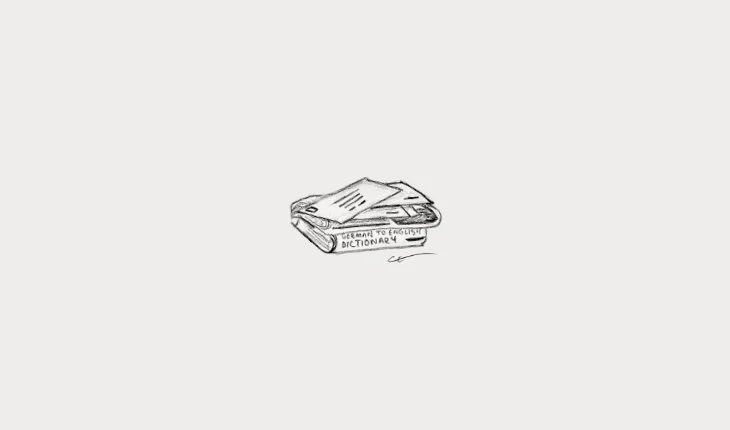
The letter from her mother glared at her from the table on top of that morning’s issue of The Herald, a couple of bills and a well-thumbed dictionary. The letter’s scathing words sat lifeless in the late afternoon sun. Outside, a magpie warbled contentedly from the clothesline. Bruni took a few deep breaths. She rested her hands on her belly. The nausea settled.
She had never considered that she would make it this far. Or that her mother would ever willingly pay 50 pfennig for postage.
Bruni allowed her mind to drift in the haze of the late afternoon.
That summer she had seen very little of her mother’s face. Always the back of her, and always just out of reach. Rushing everywhere they went, with her sisters in tow. Bruni’s small legs barely kept up with them all.
It was her sisters that she remembered best: Hildegard, Gertrude and Erna.
And the soldiers. So many soldiers.
They leered with their ugly faces, becoming more familiar to her than her own father’s. Her sisters surrounded her, their hands constantly covering her eyes and ears. Forever playing a little game with her.
Until one night, men appeared at their door. Different soldiers, in furry hats. Without hesitation, her sisters grabbed her hands and pulled her under a bed as if they’d been rehearsing it without her. They begged her to lie flat and to be silent.
Gert pressed her hand over Bruni’s mouth so hard she could still feel the impression of her fingertips as she fell asleep, even now.
Then came the sounds. The measured steps of the soldiers, creeping into their home, and their mother’s sobs from the kitchen.
Then came the eerie stillness, swiftly broken by rapid shots. Silence returned, ringing in their small ears. Movements creaked through the house, across the floorboards they’d learned to avoid. It grew into a strange pattern. Silence, then shots, silence, shots. Each verse grew closer.
The door to their room squeaked. Footsteps slowed. A fresh silence followed and lingered longer than in the other rooms. The sisters held their breaths. A series of metallic clicks came, then a snap, and a grunt.
One dense knee hit the floor. A barrel lifted the skirt of the bed to greet them. Bang!
Wood splintered from the leg of the nightstand. Another bang. Feathers from the mattress above blew out in a puff. A final bang, leaving a pitch-black hole in the wall, peering outside.
No eyes followed to check if they’d succeeded. The barrel and steps swiftly retreated. Bruni remained still.
Erna didn’t move beside her. Gert’s hand trembled against her little face, her pulse rushing through her fingertips across Bruni’s chin. It was not until the house shook with the thud of the front door that Hildy dared to suck in a breath first.
Bruni was never quite sure how much time passed before the last soldier showed up at their home, but summer was long gone when he did. The days had grown dark and cold, spent dreaming of hot meals they’d eaten routinely once. He was young, too clean to have been posted for very long. His uniform was different to the others she’d seen. His accent was thick, and his speech broken. He stood patiently while Hildy helped their mother collect their papers. He watched them closely as they gathered their things, unaware he had taught Bruni a new word: expulsion.
The journey west was an adventure, a blessing as far as Bruni was concerned. Out west, nobody made you hide or share meals so thin that your dinner was only a spoonful. Her mother slowly came into view. Gaunt and exhausted.
‘Hamburg will never be home,’ mother had declared upon their arrival.
In the years that followed, there was constant talk of their true home, of finding a way back, even finding their father. And despite that the streets did not sing to her like the valley once had; Bruni liked it all the same. There was much to explore. They fell into a routine of school, work and life. Home lingered in the sisters’ minds, but faded into a memory. Just as soldiers’ uniforms were replaced with suits, overalls and pressed conductor’s uniforms, so did the yearning for their motherland. In its place came the urge to continue their travels. To find new motherlands of their own.
Hildy left first; Gert soon followed. When Erna found an opportunity to work for a year in Australia, Bruni followed. The sisters all wrote to each other, for a time; but with the arrival of each child the letters grew infrequent.
The magpie on the clothesline broke into a new song. Released from the memories, Bruni inspected her kitchen with fresh eyes. The sunlight filtered in through the lace curtains behind her, leaving a delicate pattern overlaid across her mother’s words, accusing Bruni of marrying a communist pig and begging her, once more, to come home. But Hamburg was never home, was it?
Bruni rose to her feet and headed back toward the stove. She collected a fresh pot from the cupboard, set it on the bench and stirred the chicken and broth.
A familiar rumble pulled into the driveway. The handbrake creaked, followed by the cut of the ignition. A tall, broad man stepped out of the old Ford and shut the door behind him. Sawdust and filth doused his clothes. She watched his familiar, weary gait as he walked around to the back patio. He slipped his boots off before he let himself inside.
Joszef smelled of pine and sweat. The fibres of his flannel shirt clung to droplets of sap.
‘Hello darling,’ his accent affectionately dragged out the word darling.
He pecked Bruni on the cheek and inspected the contents of the pot. His eyes lit up. Bruni smirked and grabbed the empty pot from the counter and headed for the sink.
‘Here,’ Joszef stepped before her, gently taking the pot, ‘go, sit.’
Bruni waddled back to her seat. She watched his tired and filthy limbs clumsily continue the process. It was a dish she’d picked from his childhood, full of paprika and warmth. One he’d taught her early on.
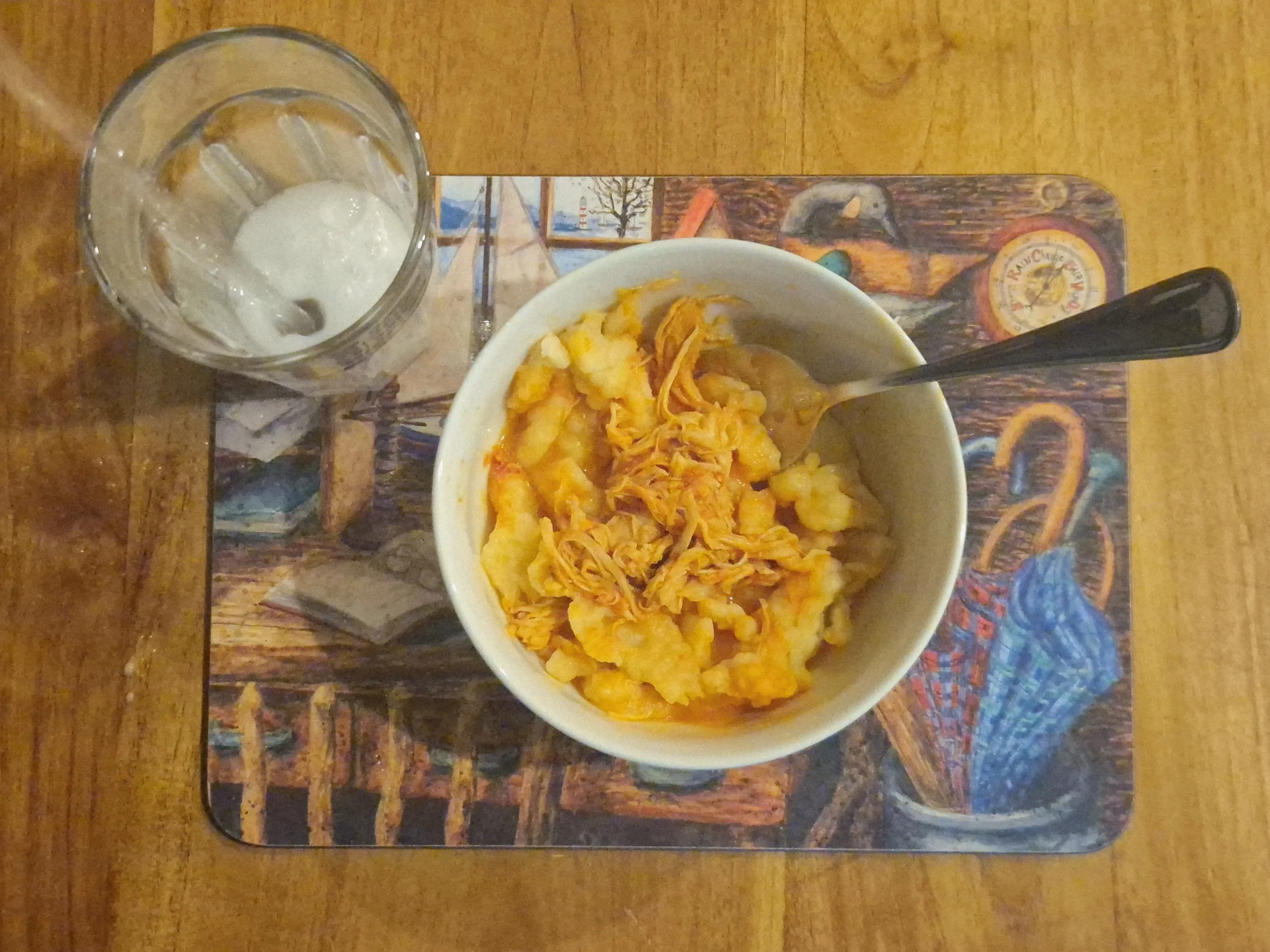
They slipped into a comfortable silence while he worked, mixing together the flour, eggs and water. He pulled out a large mixing bowl that he’d drilled large holes into for her last winter. When the water reached a boil, he began to scrape large helpings of the mixture through it. They plopped into the water at the perfect size.
She’d grown up calling it spätzle; Jozsef called it nokedli. There wasn’t a simple word for it in English.
‘How is she?’ No amount of English lessons seemed to correct his pronunciation of w sounds from becoming v’s.
Bruni adjusted in her chair and sighed. She patted her belly. What was the word for it? Her doctor had just said it last week.
‘Wiggly.’
Joszef nodded with a grin. He was certain they were having a girl, and Bruni loved him all the more for it.
They had met at a dance in St Albans. The first thing he’d asked her was if her shoes were comfortable. The second was whether she would like to dance with him.
Bruni watched him scoop out the fresh spätzle from the boiling water. Even the smallest action he took with great care. He did not hit or snarl, like so many of the men she’d encountered so young. He had never been a soldier, only a boy.
‘What will she call this?’ Joszef pointed to the pot.
There was no simple word for csirkepaprikás. Bruni reached for the pile of mail, stuffing her mother’s letter to the bottom, and plucked out the dictionary that lived on the table. It had been a gift from Erna. German to English. She’d gotten Joszef one too, in Hungarian. Sometimes in the evenings they’d search for their English middle-grounds, learning fragments of each other’s mother tongues.
‘Goulash?’ Bruni offered.
Joszef considered this. ‘No beef.’
Bruni flicked to another page.
‘Chicken goulash?’
The words felt slippery. Five years’ practice and still the word chicken felt like effort. At least the word huhn made sense. A hunh was a hunh, after all.
‘Chicken goulash,’ Joszef repeated. The last syllable of goulash rounded with his accent, much like the start of darling.
‘Yes,’ he collected two bowls from the low cupboard to his right. He scooped two generous helpings of spätzle, doused them in steaming sauce and tender chicken, and brought them to the table.
‘Chicken goulash,’ he agreed.
As Joszef sat, he glanced at an envelope sticking out of the pile.
‘How is your mother?’
Bruni brought a spoonful up to her mouth and paused.
‘She calls you a communist.’
At this, Joszef snorted.
‘I hope to meet her.’
Get the recipe!
Originally shared on Substack.
Latest issues of From the Stovetop are released on the first Tuesday of every month. Subscribe here.
